صحافة الكترونية مرخصة وزارة الاعلام ترخيص رقم 366-2019

صحافة الكترونية مرخصة وزارة الاعلام ترخيص رقم 366-2019
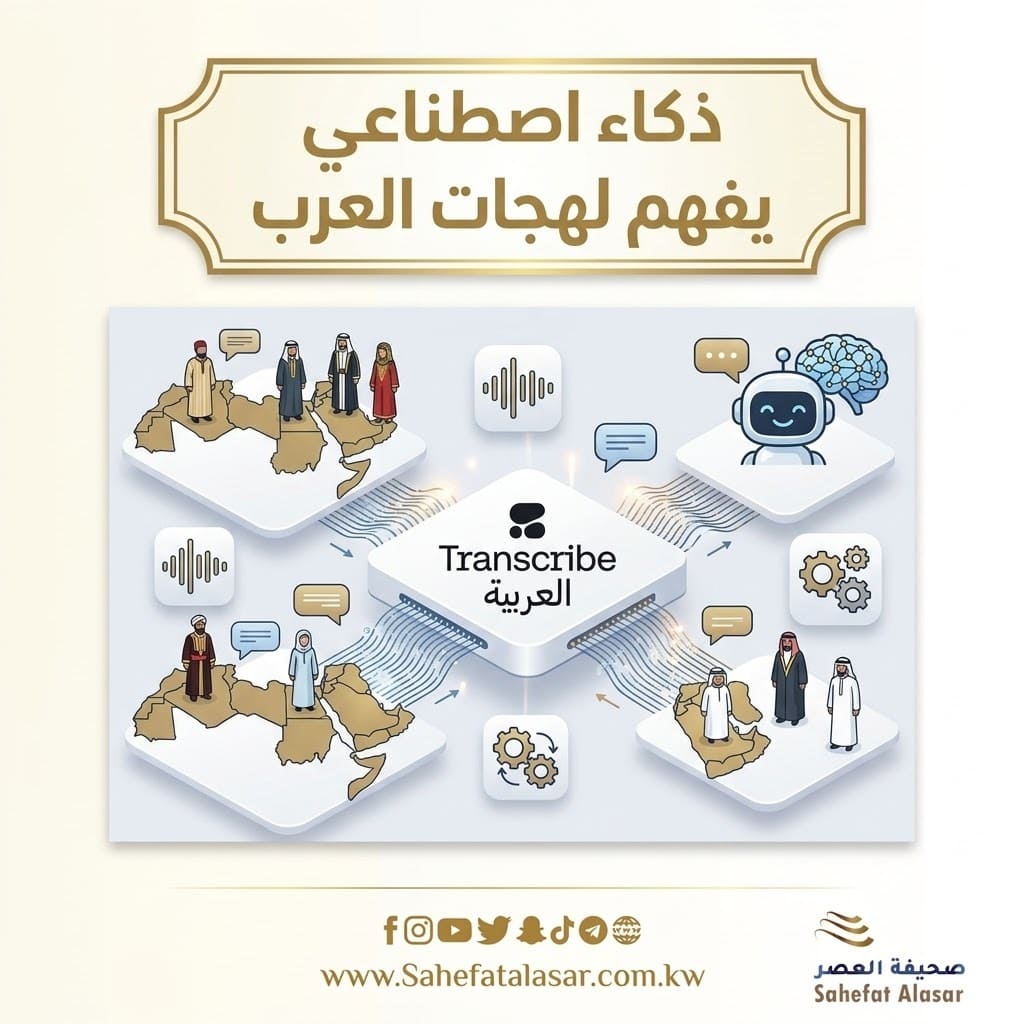
The development of Arabic-speaking AI technologies is undergoing a significant transition. While large language models have made remarkable strides in text processing, automatic speech recognition and transcribing remain a formidable challenge, particularly when dealing with the diversity of dialects and the everyday linguistic mix in contemporary work environments. To address this digital divide, Cohere has announced the launch of its latest model, Cohere Transcribe Arabic, an open-source platform specifically designed to tackle the unique audio challenges of the Arab world's production and corporate environments. A leap
in accuracy standards: a tangible advantage.
Theoretical evaluation alone is no longer sufficient to confirm the efficiency of AI models; therefore, the new model underwent rigorous testing, the results of which demonstrated its superiority over the most prominent open-source models currently available. The model recorded the lowest word error rate on the global Hugging Face platform in Arabic speech recognition, giving it a significant advantage in terms of reliability and accuracy when converting voice data into written text.
Linguistic flexibility: Understanding dialects and language switching
. The true value of this model lies in its internal architecture, which is geared towards understanding the linguistic reality of the Arab user. Everyday speech, especially in meetings and corporate voice communications, is rarely limited to Modern Standard Arabic. Instead, the challenge lies in two areas:
Dialectal diversity: The model possesses an advanced ability to capture the nuances and characteristics of different regional dialects without sacrificing the accuracy of the output text. It can understand approximately 30 different dialects (Saudi Arabia alone has three main dialect groups and several other linguistic subgroups, while more than eight dialects are used in Morocco).