صحافة الكترونية مرخصة وزارة الاعلام ترخيص رقم 366-2019

صحافة الكترونية مرخصة وزارة الاعلام ترخيص رقم 366-2019
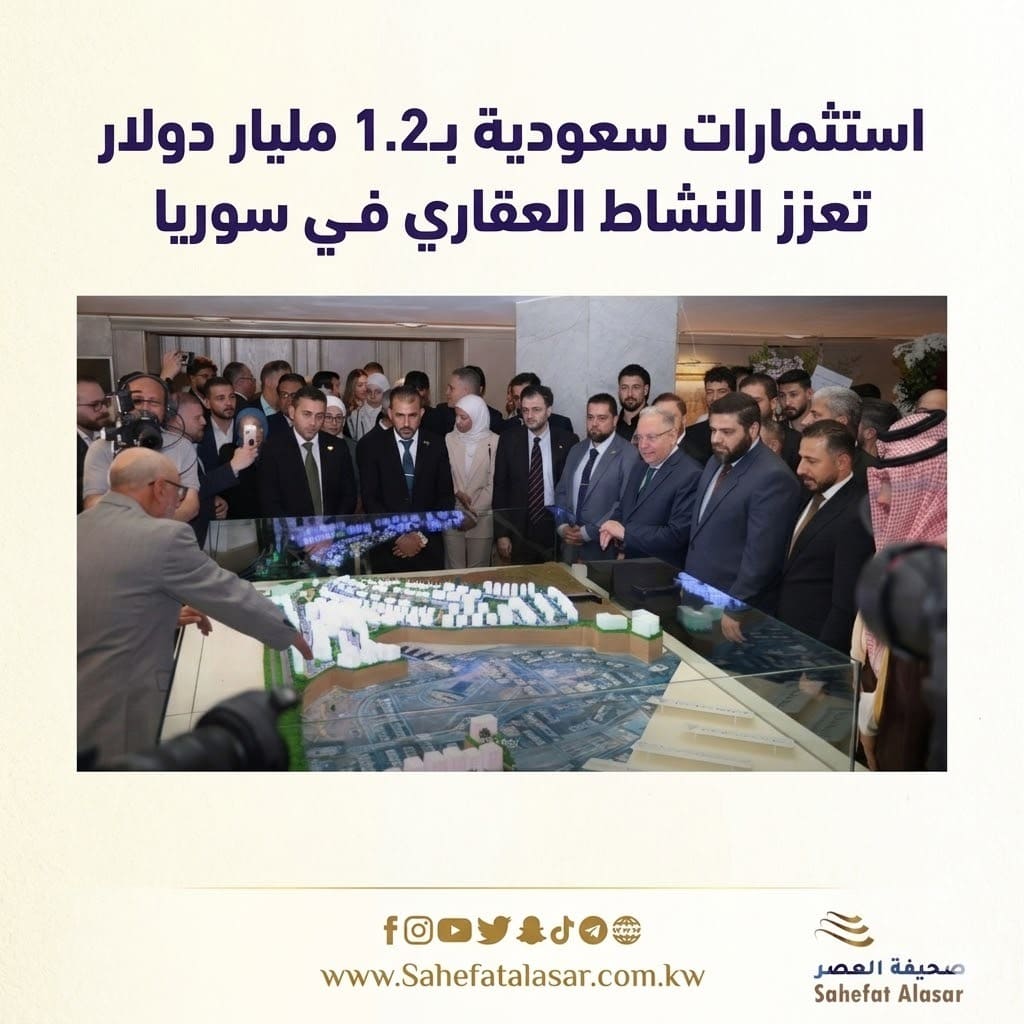
Saudi real estate investment and development company Abyat has launched two projects in the Damascus countryside with estimated investments exceeding $1.2 billion. This move reflects the accelerating influx of real estate investments into Syria as part of a broader wave of reconstruction and urban planning projects.
Mohammed Al-Saloum, General Manager of Abyat, told Asharq that the estimated cost of the "Modern Urban Complex" project is approximately $1 billion, while the "Abyat Hills" project will cost around $200 million. Both projects will be implemented in partnership with the Syrian Ministry of Public Works and Housing and the General Housing Establishment.
Al-Saloum explained that the financing will be disbursed in stages, with the first phase starting at approximately $50 million. Construction will proceed concurrently with sales, based on the percentage of units completed. He added that the financing will rely partly on the company's own resources and those of its shareholders, and partly on off-plan sales revenue.
The "Modern Urban Complex" in the Al-Bajaa area of rural Damascus, a gated residential complex, spans nearly 6 million square meters and includes approximately 20,000 housing units. It is expected to be completed within eight years. The "Abyat Hills" project, located in the Qudsaya suburb, covers approximately 380,000 square meters and includes more than 2,000 housing units. It is expected to be completed within four years, according to the Syrian Arab News Agency (SANA).
For his part, Syrian Minister of Public Works and Housing Mustafa Abdul Razzaq told Asharq that the two projects target approximately 22,000 housing units. He added that Syria needs two million housing units and that the ministry supports any new housing project, "regardless of the social class it directly targets," given that its impact extends to other segments of society through the relocation of residents.
Abdul Razzaq described the project as "unique in terms of urban planning," as it is based on the gated community model. He pointed out that this type of project aligns with modern urban planning trends and contributes to job creation and revitalizing the construction industry.
The complexities of land ownership in Syria led to the selection of the site in the Damascus countryside, as the land is wholly owned by the Ministry of Housing. This facilitates licensing procedures and direct contracting with investors, according to statements made to Asharq by the Governor of Rural Damascus, Amer Al-Sheikh.