صحافة الكترونية مرخصة وزارة الاعلام ترخيص رقم 366-2019

صحافة الكترونية مرخصة وزارة الاعلام ترخيص رقم 366-2019
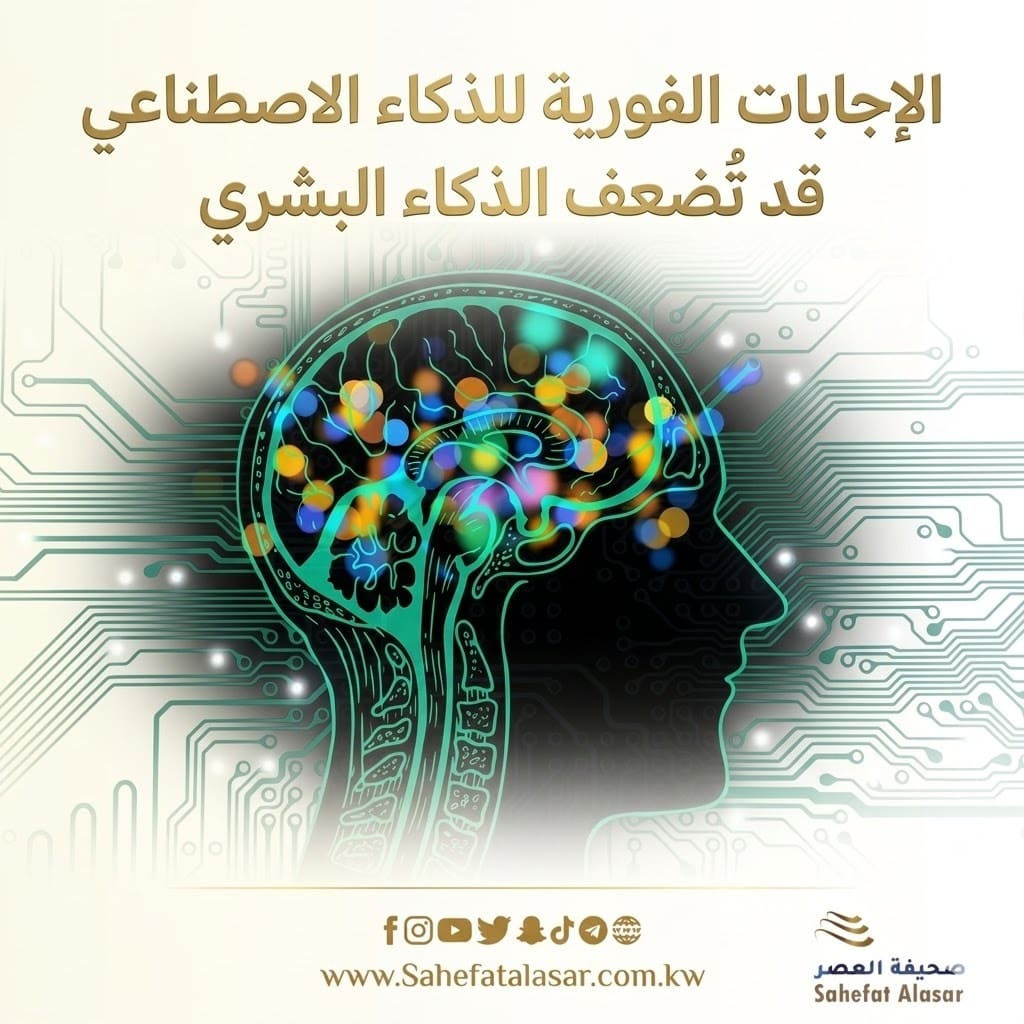
The Royal Observatory Greenwich, one of the UK's oldest scientific institutions specializing in astronomy, has warned that the rapid proliferation of artificial intelligence tools capable of providing instant answers to complex questions could, in the long run, lead to a decline in human intellectual abilities.
According to a BBC report, Paddy Rodgers, director of the Royal Museums Greenwich Group, which oversees the observatory, said that the institution's rich scientific history demonstrates the strength of human knowledge and scientific curiosity, but he stressed the need to avoid "complete reliance" on artificial intelligence.
He added, “Relying solely on immediate answers can lead to the loss of the habit of asking questions and critical evaluation, skills that form the foundation of knowledge, experience, and innovation.”
Rodgers’ remarks came as the observatory undergoes a major upgrade as part of a project called “First Light,” which aims to build upon the legacy of the astronomers who have worked at the institution for over 350 years and present that legacy in a contemporary scientific spirit.
He noted that many major scientific discoveries would not have been possible without technological advancements, but he emphasized that technology alone is not enough. Scientific discovery also depends on human curiosity, asking questions, and pursuing answers that can sometimes lead to unexpected results—something that artificial intelligence systems may not always convey.
According to Rodgers, early astronomers built up a vast amount of data about the sky, data that was later used in fields and applications they could never have imagined when they collected it. He added that part of their work involved doing things that might seem unnecessary, or things that machines couldn’t do in the same way.
He said, “Humans did this, and ultimately, these works became a vast scientific resource, which, 150 years after they were written, could be used to help verify new theories and ideas about other factors affecting navigation on Earth.”
Meanwhile, artificial intelligence has been used to help achieve important scientific discoveries.
In 2024, scientist Demis Hassabis received the Nobel Prize in Chemistry for work described as revolutionary in the field of proteins, the building blocks of life.